
Classroom Features That Support Early Language Immersion
Key Takeaways
- Classroom design strongly influences how children adapt to language immersion environments.
- Visual labels and displays help reinforce vocabulary recognition throughout the day.
- Activity zones encourage children to use Mandarin naturally during play and interaction.
- Audio tools and teacher communication routines support listening and speaking development.
- A structured environment helps align immersion learning with the overall curriculum for preschool education.
Introduction
Early language immersion depends heavily on classroom structure and environmental consistency. Preschool children learn languages through repetition, observation, interaction, and routine exposure rather than direct memorisation alone. That said, in a Mandarin immersion preschool in Singapore, the classroom itself often functions as part of the teaching process. Visual materials, activity layouts, and communication methods all contribute to how children absorb vocabulary and sentence structures during daily routines. Certain classroom features are particularly important because they help maintain immersion naturally while supporting comprehension among young learners.
Visual Displays and Labelled Classroom Materials
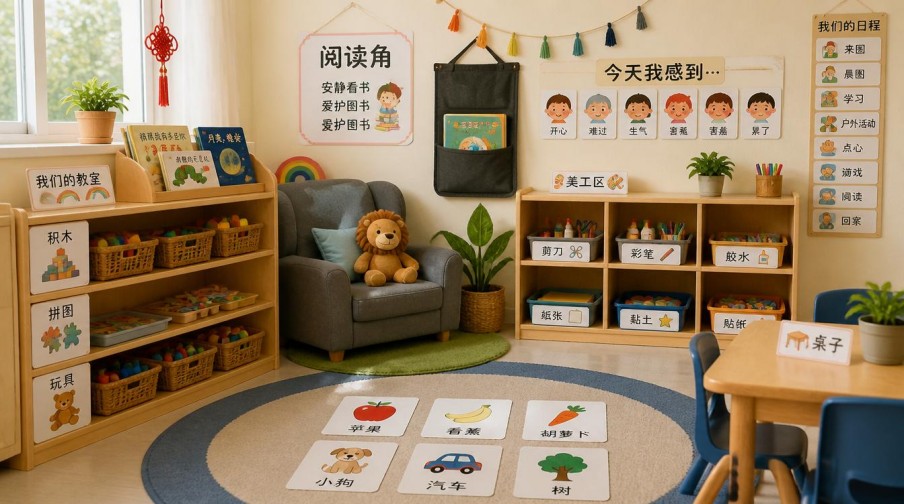
Visual learning tools are among the most important classroom features in language immersion settings. Preschool classrooms commonly include labelled objects, illustrated vocabulary charts, posters, and learning boards written in Mandarin. Everyday items such as chairs, doors, books, and storage areas may include labels that expose children to repeated word recognition throughout the day.
This consistent visual exposure helps children associate spoken words with physical objects and classroom actions. Instead of depending entirely on direct instruction, learners absorb vocabulary passively through repeated interaction with their surroundings. Teachers also use picture-based schedules and illustrated instructions to guide routines without immediately switching languages when children become confused.
Visual communication becomes especially useful for younger preschool learners who are still developing reading readiness. These materials, in many cases, are organised around themes already included in the curriculum for preschool education, allowing vocabulary reinforcement to remain connected to classroom lessons and developmental goals.
Structured Activity Zones for Practical Language Use
Another important feature is the use of dedicated activity zones inside the classroom. Immersion classrooms are often divided into sections such as reading corners, pretend play stations, sensory activity tables, and art spaces. Each area encourages children to use specific vocabulary naturally while participating in activities.
For example, a roleplay kitchen area may introduce food-related vocabulary, while an art station encourages discussion involving colours, shapes, and actions. Instead of learning words in isolation, children hear and repeat language while actively engaging in tasks. This context-based learning helps improve retention because vocabulary becomes associated with real experiences.
These activity zones in a Mandarin immersion preschool also promote peer communication. Children often imitate one another during play, which creates additional opportunities for conversational repetition. Teachers can guide interactions while still allowing children to practise language informally through group participation and shared activities.
Activity zones also help classrooms remain flexible. Themes and learning objectives can rotate regularly without changing the overall classroom structure, making it easier to align immersion activities with lesson planning requirements.
Audio Resources and Interactive Learning Tools
Listening exposure plays a major role in early immersion programmes because preschool learners develop comprehension before reading and writing proficiency. Many classrooms, therefore, include audio-based learning resources such as storytelling sessions, music activities, pronunciation exercises, and recorded vocabulary prompts.
Songs and rhymes are commonly used because repetition helps children recognise speech patterns and tonal pronunciation in Mandarin. Teachers may also use repeated verbal routines during transitions, snack times, or classroom cleanup sessions to increase daily exposure consistently.
Some classrooms incorporate interactive learning tools such as digital storytelling devices or touch-based language games. These resources are generally used as supplementary support rather than replacements for teacher interaction. Their main purpose is to provide additional repetition opportunities that reinforce vocabulary and listening skills.
The combination of visual learning, structured activities, and audio exposure creates a classroom environment where language use becomes integrated into normal daily behaviour rather than limited to isolated teaching periods.
Conclusion
Successful early language immersion relies on more than direct instruction alone. Classroom design, activity organisation, visual materials, and communication routines all contribute to how children absorb and use Mandarin during preschool years. These classroom features in a Mandarin immersion preschool help create continuous exposure that supports listening, comprehension, and verbal interaction throughout the day. Once properly aligned with the broader curriculum for preschool education, immersion classrooms can provide structured yet practical opportunities for young learners to build familiarity with a second language naturally.
Visit Orange Tree Preschool and discover a preschool environment that supports consistent bilingual exposure from an early age.